Podcast
Helena Blavatsky and the Origins of Ancient Wisdom
0:00/
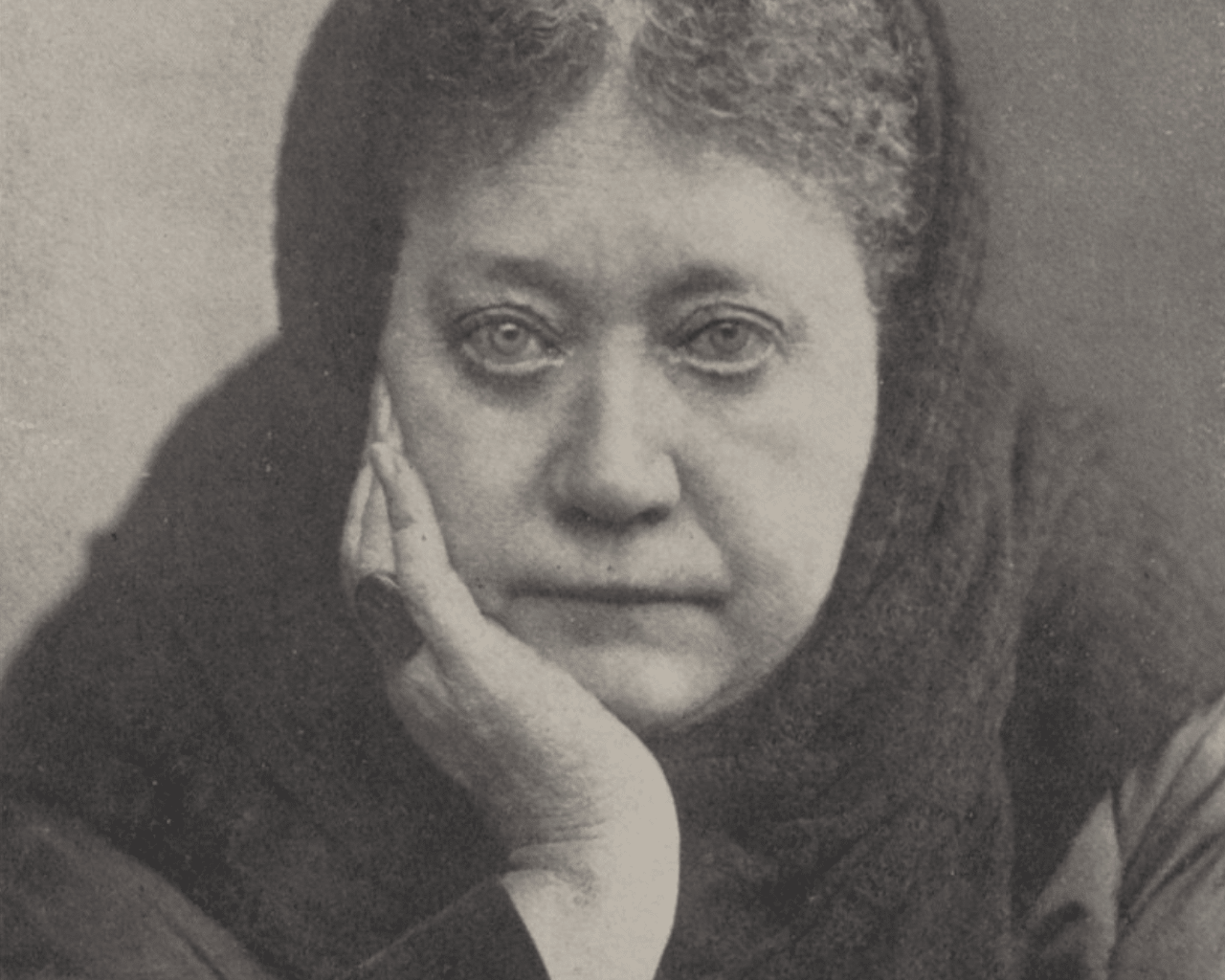
Helena Petrovna Blavatsky, co-founder of the Theosophical Society, claimed that behind the world's religions lay an ancient and universal wisdom, preserved through the centuries by hidden masters and secret traditions. Her teachings would profoundly influence modern spirituality and Western understandings of Asian religions. But was she revealing a forgotten spiritual tradition, or drawing on ideas already circulating in the nineteenth century? Taking Urs App's The Mother of All Religions as their starting point, Wouter Hanegraaff and Paul van der Velde trace the development of Blavatsky's ideas through Spiritualism, Western occultism, Platonism, and the growing fascination with India and Tibet.
Along the way, we uncover some remarkable stories. We discuss Blavatsky's mysterious Mahatmas, and the hidden manuscripts that supposedly contained humanity's oldest knowledge. We explore the story of Nicolas Notovitch, who claimed to have discovered a Tibetan manuscript describing Jesus' lost years in India, and why such stories continue to capture the imagination. The conversation also takes us into Theosophy's surprising influence on modern Buddhism, Zen, and yoga, its role in India's cultural and political awakening, and the ways supposedly ancient spiritual practices have been reinvented in modern times.
But the conversation ultimately raises a deeper question: what can historical research actually tell us about spiritual truth? If we can trace Blavatsky's ideas to existing books and intellectual traditions, does that necessarily mean her spiritual experiences were not genuine? Could she have used the language of her time to express something she believed she had experienced directly? And why do we so often appeal to ancient texts, hidden masters, or sacred traditions to give authority to our own insights? Wouter and Paul explore the tension between historical evidence and personal experience, and the limits of what scholarship can establish about spiritual claims.
This conversation reflects a central ambition of MarcoToday: to bring esoteric traditions back into serious intellectual discussion without either accepting their claims uncritically or dismissing them in advance. By examining how ideas emerge, acquire authority, and become accepted as ancient wisdom, we also begin to question the assumptions through which we understand knowledge, religion, and reality itself.
Paul's Sanskrit Recitation
During the conversation, Paul van der Velde recites verses from the Nala episode of the Mahabharata, which he learned from one of his teachers in India. Here is his English translation of the passage:
“There was a king, the son of Virasena. He was powerful and knew how to deal with horses. He stood at the head of all kings, as the sun due to his radiance. Likewise, there was a king in the country of Vidarbha named Bhima. His power was awesome…”
Further Exploration
Where did Helena Blavatsky find the ideas that shaped Theosophy? How did her vision of an ancient, universal wisdom influence modern understandings of religion? And what can historical research tell us about the truth of spiritual claims?
At the heart of this conversation is Urs App's The Mother of All Religions, a detailed historical investigation into the development of Blavatsky's ideas. By tracing her writings and the sources she drew upon, App challenges the notion that her teachings emerged fully formed from an ancient, hidden tradition.
The Origins of Theosophy
Blavatsky's two major works, Isis Unveiled (1877) and The Secret Doctrine (1888), provide the foundations of her vision of a universal wisdom religion. The conversation explores how her ideas evolved between these publications, particularly her growing emphasis on India, Tibet, and the mysterious Mahatmas who supposedly guided her work.
An important earlier influence was Godfrey Higgins, whose Anacalypsis sought to uncover a common religious tradition underlying the world's religions. For a broader understanding of the intellectual environment from which Theosophy emerged, Joscelyn Godwin's The Theosophical Enlightenment traces the movement's roots in eighteenth- and nineteenth-century Western esoteric thought.
The production of Blavatsky's books also raises questions about authorship and authority. In her article “My Books,” published in Lucifer 8, no. 45 (1891), pp. 241–247, Blavatsky reflected on the difficulties involved in preparing her major works for publication. The conversation discusses the editorial contributions of Alexander Wilder to Isis Unveiled and of Archibald and Bertram Keightley to The Secret Doctrine. Their involvement complicates the familiar image of Blavatsky as the sole author of texts received through extraordinary spiritual insight.
The discussion also introduces figures such as Henry Steel Olcott, A. P. Sinnett, Annie Besant, and Charles Webster Leadbeater, whose activities helped transform Blavatsky's teachings into an international movement. The later emergence of Jiddu Krishnamurti as a supposed World Teacher, and Rudolf Steiner's break with Theosophy, illustrate how questions of spiritual authority continued to shape its development.
Jesus in India and the Mystery of Hidden Texts
One of the more intriguing excursions concerns Nicolas Notovitch, who claimed to have discovered a manuscript at Hemis Monastery in Ladakh describing the unknown years of Jesus' life. According to his account, Jesus had travelled to India and studied Eastern religious teachings.
Notovitch's The Unknown Life of Jesus Christ became part of a much wider fascination with the possibility that Christianity had hidden connections to Asian religions. Edgar J. Goodspeed's Modern Apocrypha (1956) offers a critical examination of such stories and the texts through which they circulated.
The discussion draws a parallel with Joseph Smith, the founder of Mormonism, and his account of the golden plates. Both examples raise questions about inaccessible scriptures, extraordinary revelations, and the authority attributed to sacred texts that cannot be independently examined.
Buddhism, Tibet, and the Reinvention of Asian Traditions
Theosophy played a significant role in shaping modern Western perceptions of Asian religions, but its influence also extended into Asia itself.
The conversation explores Henry Steel Olcott's involvement in the Buddhist revival in Sri Lanka and the relationship between Theosophy and modern Japanese Buddhism. Figures such as Soyen Shaku, Paul Carus, and D. T. Suzuki illustrate the complex exchanges through which Buddhism was presented to Western audiences and reinterpreted in modern terms. Carus's The Gospel of Buddha is an important example of this process.
Donald S. Lopez Jr.'s The Tibetan Book of the Dead: A Biography (2011) provides another perspective on the transformation of Asian religious traditions. It examines the history and Western reception of a text closely associated with Walter Yeeling Evans-Wentz, whose Theosophical interests influenced how Tibetan Buddhism was introduced to English-speaking readers.
The conversation also examines the use of Sanskrit and Tibetan terminology in Theosophical writings, particularly the concept of svabhāva and the supposed Svabhāvika school of Buddhism. The appearance of terminology derived from Western scholarship in accounts attributed to the Mahatmas raises questions about the sources of their purported knowledge. Heinrich August Jäschke's A Tibetan-English Dictionary (1881) is one of the reference works discussed in this context, particularly in relation to Tibetan names and their interpretation.
These questions connect with broader developments in Buddhist philosophy, including Nāgārjuna's treatment of intrinsic nature, and illustrate the importance of distinguishing historical traditions from later interpretations of them.
Modern Yoga, Culture, and Spirituality
The influence of Theosophy extended far beyond religious organizations. Its ideas circulated through literature, art, philosophy, and movements for cultural and political renewal.
Mark Singleton's Yoga Body: The Origins of Modern Posture Practice (2010) offers a particularly revealing example of how supposedly ancient traditions can take recognizably modern forms. Singleton examines the relationship between contemporary postural yoga, Indian traditions, and Western physical culture.
The conversation also touches on Rabindranath Tagore, the transmission of Indian culture to the West, and Theosophy's influence on European artistic circles, including figures such as Piet Mondrian, Jan Toorop, and Louis Couperus.
History, Experience, and Truth
Together, these books and historical figures illuminate a central tension running through the conversation.
Historical scholarship can reconstruct the development of ideas, identify literary influences, examine the production and transmission of texts, and question claims about ancient sources. But does discovering where an idea came from establish whether the experience or insight behind it was genuine?
The distinction between the historical origins of a belief and the truth of what that belief claims remains one of the most important questions raised by Blavatsky's legacy, and one that extends far beyond Theosophy.
Related


Subscribe to the MarcoToday newsletter
and join the conversation.