Essay
The Courage to Look Beyond
“For man has closed himself up, till he sees all things thro’ narrow chinks of his cavern.” (William Blake, The Marriage of Heaven and Hell, plate 14).
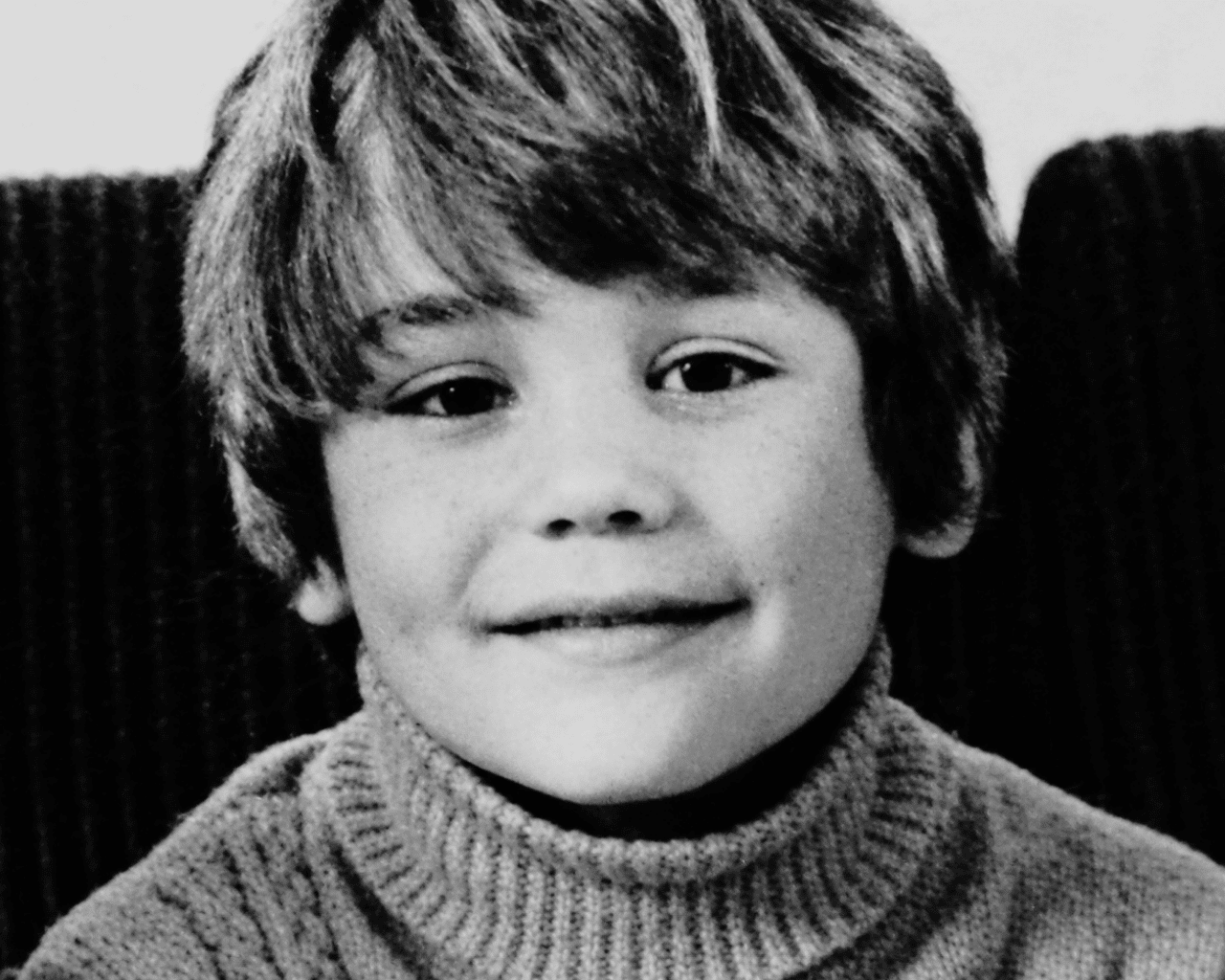
I have a memory of sitting on my father’s knee when I was a little boy. I don’t remember exactly where we were, or how old I was. I may have been seven, perhaps ten. What I do remember is a piece of paper and my father explaining to me what wood was made of. He drew a piece of wood on the paper. Inside it, he drew little circles representing molecules. Inside those were even smaller circles: atoms, made up of electrons, protons and neutrons.
I was fascinated. Until then, I had never really thought about wood. It was just something you made tables and chairs from. But suddenly there was a whole world hidden inside it. A world I could not see, but which was there nevertheless. And apparently, if you were curious enough, if you were prepared to look carefully and dig deeply enough, you could discover that world.
I think something was born in me that day. Curiosity. And the person who gave it to me was my father.
My Father’s World
I was born in 1974 in Goes, the Netherlands, the son of an evangelist. My father travelled extensively, visiting countries such as India, Sri Lanka, Kenya, Tanzania and Haiti, where he taught the Bible and trained local Christians to establish churches and spread the Gospel within their own communities.
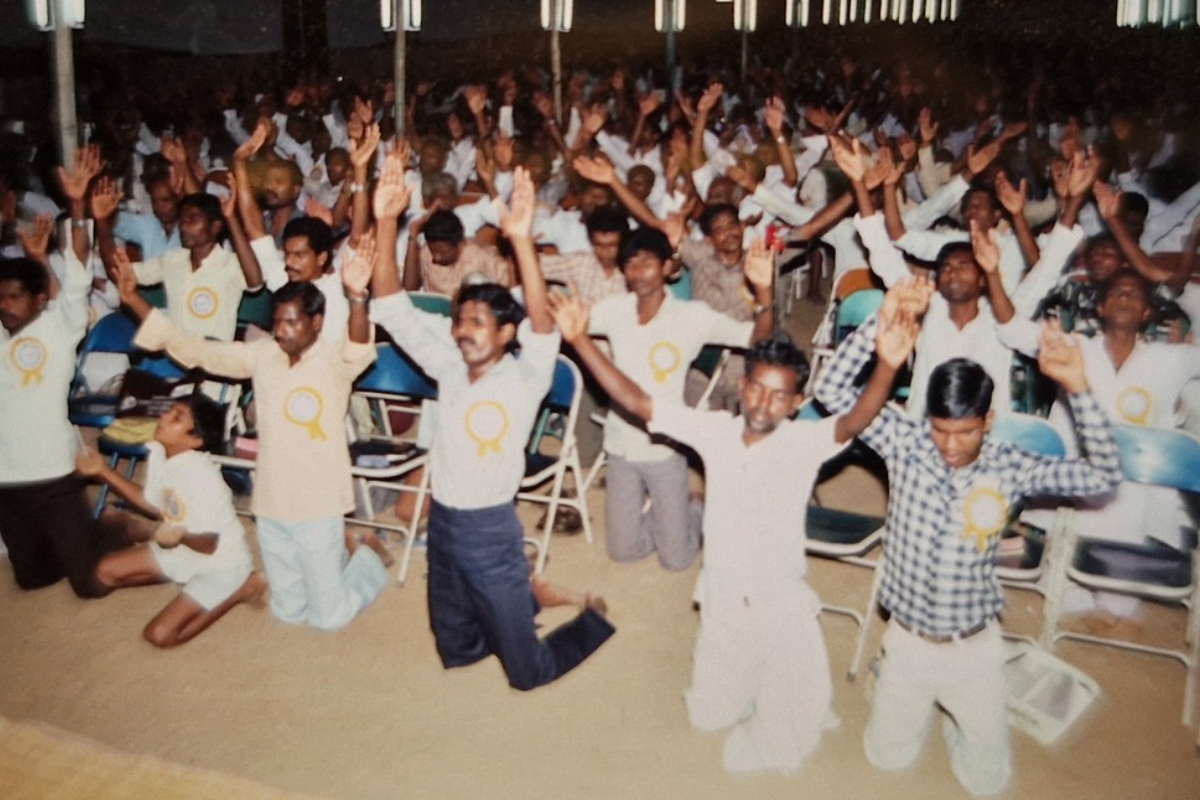
He took his calling seriously, and the book on which it rested just as seriously. He didn’t simply read the Bible; he studied it, consulting commentaries and looking up words in the original Greek or Hebrew whenever he wanted to understand a passage more deeply. He wasn’t a scholar of these languages, but he was determined to get as close to the original meaning as he could. I still remember the glint in his eyes whenever he discovered something new after hours of study.
That appealed enormously to me as a child. If you are going to do something, do it properly. Don’t settle for the surface. Dig deeper. The Bible became another piece of wood: behind the words lay another world, and my father knew the way in. So I followed his example. I wanted to understand the original texts, the meanings behind the words and the history behind the stories.
But there was a tension in his curiosity that I couldn’t yet see. My father believed that truth could be discovered, but he also believed he had already found it. He believed God had revealed the true meaning of the Bible to him, which meant that disagreement was more than a difference of interpretation. I was encouraged to look beneath the surface, but only as long as what I found confirmed what he already believed. That contradiction would shape much of my life.
Spiritual Warfare
One of my father’s Bible-study series was called Oorlog voeren of kerkje spelen: Waging War or Playing Church. In many ways, that title captured his entire worldview. Most Christians, he believed, didn’t understand the situation they were in. We were engaged in a spiritual war between God and his angels on one side, and Satan and his demons on the other. His missionary work was part of that struggle. When he travelled to India, for example, he didn't simply encounter a religious culture with its many Hindu deities. To him, the mission field was a battlefield populated by demons.
At home, that worldview had consequences too. One of my brothers resisted my father’s religious beliefs from a young age. He didn’t want to go to church, and he loved ‘worldly’ music, like Michael Jackson, rather than the Christian music my parents played. What began as arguments developed into an increasingly painful conflict that at times became physical. After my father passed away, my mother told me that a visiting pastor from India had once suggested my brother might be possessed. This only reinforced my father’s belief that his resistance was part of the spiritual battle, and that breaking his will was ultimately for his own good. My brother paid a high price. His life took a hard turn, and for years it remained that way.
My other brothers and I watched and found our own ways of responding. Having seen what happened to my brother, I was afraid the same might happen to me. So I adapted. I became the model Christian teenager. I studied the Bible, listened to Christian music, went to church twice on Sundays, and attended other Christian gatherings during the week. I asked the right questions and followed my father deep into his world, to the point where he began to see me as a possible successor. It brought me closer to my father, and that meant a great deal to me. Only much later did I begin to wonder what I had put aside to achieve it.
Because the spiritual battle wasn't just something happening around me. It was taking place inside my own head, too. I believed that both God and the Devil could know my thoughts, so I learned to monitor them carefully. Temptation was supposed to be subtle: give the Devil the smallest opening, and he could gradually lead you away from God without you even noticing. So there were many things I simply didn’t do. I didn’t go dancing with my friends or go to the cinema, because I believed Jesus wouldn’t have done those things either. Sexuality was especially dangerous territory. Gradually, what I really wanted became less important than what I was supposed to want, and I became so good at the latter that I barely noticed the former disappearing.
I don’t want to compare my childhood to growing up under real bombs, but the language of war still feels appropriate to what was happening inside me. Danger could appear at any moment, even in my own thoughts. And if your thoughts themselves can betray you, it becomes difficult to know where you are safe. My father had taught me to be curious, but my upbringing had taught me to fear where that curiosity might lead.
My Way Out
And yet, ironically, it was my curiosity that eventually led me beyond my father’s world. I kept digging, questioning more and more of what I had always taken for granted, including the faith in which I had been raised. I agreed with my father that understanding the Bible meant going back to the original texts. But shouldn’t that require actually mastering ancient Greek and Hebrew? And even then, how could we be sure that the words meant the same to us as they had to the people who wrote them centuries ago? What are words, really?
I wanted to talk about this with my father and share what I found, just as he had once shared his discoveries with me. But I noticed him pulling back. Our conversations became shorter, and certain subjects were avoided. I found that difficult to understand. We had set out on this journey together, hadn't we? Yet the further I went, the less he seemed willing to follow.
Despite the growing distance between my father and me, I kept digging. It wasn’t easy. My doubts ran ahead of my courage. Even as an adult, I sometimes found it frightening to think certain thoughts, let alone say them aloud. And even after I stopped considering myself a Christian in 2003, it took time to free myself from the fear that questioning what I had been taught might lead me somewhere dangerous.
But curiosity kept pushing me further. I began studying history and ancient Greek before turning to Assyriology, the study of the languages and cultures of ancient Mesopotamia, in 2007. I graduated in 2012.
I had hoped my father would be interested in my discoveries. Take Sennacherib, for example, the Assyrian king who, according to the Bible, invaded the kingdom of Judah during the reign of King Hezekiah. Here were the Assyrians' own records of the events described in the Bible. But my father never asked me about any of it. He had always encouraged me to look beyond the surface of the biblical text, yet when I began exploring sources from outside it, he showed little interest.

For me, these discoveries changed how I read the Bible. As I encountered ancient Near Eastern traditions, including a flood story that predated the biblical account of Noah, familiar biblical stories took on a completely different meaning. The Bible didn't become meaningless to me, but I began to see it as a product of history, shaped by the people and cultures from which it emerged. And in doing so, I finally felt able to cut the religious umbilical cord that still connected me to my father's world. I had escaped.
Or so I thought. By questioning what I had grown up believing, I had found my way out. But without realising it, I had already drawn a new boundary.
A New Boundary
I could now do things I had never allowed myself to want as a teenager, like going out dancing or going to the cinema. But there were still things I couldn’t take seriously: spirituality, the occult and the paranormal. I no longer rejected them because they were demonic, but because they seemed irrational, ridiculous and unworthy of serious consideration by an educated person. The fence had moved, but it was still a fence.
Years later, that fence began to crack.
My former partner had a spiritual experience that led her to explore a world I wanted little to do with. By then, I felt I had a much better understanding of how the world worked. Spirituality seemed unscientific to me, but it also reminded me a little too much of the religion I had worked so hard to leave behind. I had no desire to go down that road again. So I was sceptical and tried to talk her out of it, explaining why much of what she described experiencing made little sense to me. She felt I wasn't taking her seriously, and the more I resisted, the more distant we became. Eventually, our differences contributed to the end of our relationship.
Yet her experience continued to intrigue me. Could there be more to it than I was willing to admit? After all, I had already been through one profound change in how I saw the world. Could something like that happen again? I was sceptical, but curious enough to explore her world for myself, starting with a short course in chakra psychology.
During one exercise, I sat opposite another participant. We were asked to quietly tune in to each other and describe whatever came to mind. She went first, describing exactly what I was thinking and imagining, without me saying a word. Then we reversed roles, and the same thing happened again. I couldn't explain what had happened.
Over the following years, my curiosity drew me deeper into spirituality, including several ayahuasca ceremonies, where I also had experiences I couldn't explain but which profoundly changed my life. Some of these experiences challenged my most basic assumptions about the nature of reality, time, space, matter, consciousness, and what it means to be human.
The more I reflected on these experiences, the more I began to realise that when I had left religion behind, I had simply replaced one set of certainties with another. I had assumed that my scientific worldview was based on established facts, without recognising how much it also rested on underlying assumptions. Without questioning them, I had allowed those assumptions to shape what I considered possible and what I dismissed as unscientific and not worth taking seriously.
And yes, perhaps there are perfectly natural explanations for what I experienced. I simply don't know. But I was no longer willing to dismiss something just because it didn't fit what I already believed. As a result, I became increasingly open to unfamiliar ideas, curious to discover what I might learn from them and how they might affect me.
Rejected Knowledge
I had now experienced two profound changes in how I understood the world, and I was becoming increasingly curious about the ideas I had once dismissed. But I hadn’t given much thought to why I had learned to dismiss them in the first place.
That changed when my cousin, the historian Wouter Hanegraaff, introduced me to the academic study of esotericism in Western culture. Through his work, I encountered the concept of rejected knowledge: the idea that the history of esotericism is also a history of exclusion.
For example, during the Renaissance, Neoplatonic and Hermetic ideas were part of serious intellectual debate, explored by influential thinkers such as Marsilio Ficino. They were contested, but they were part of the conversation. During the Reformation and its aftermath, however, Protestant critics condemned these ideas as dangerous pagan influences on Christianity. Later, influential Enlightenment scholars dismissed them as superstition. As a result, these ideas were gradually pushed outside the boundaries of accepted knowledge.

As I read about this history, I felt an unexpected sense of recognition. As a child, I had been taught to reject spirituality and the occult because they were demonic and therefore dangerous. Later, I had dismissed them myself because they seemed irrational and unworthy of serious consideration. Wasn’t this similar to what had happened on a much larger scale in Western intellectual history?
I began to see that the boundaries I had taken for granted were not simply my own. They reflected judgments passed down through generations about which ideas were dangerous, irrational or simply not worth investigating. Understanding that history made me want to question those boundaries. Whose judgments had I accepted? Who had taught me to stay away from certain ideas, and why had I believed them? And what might those warnings have kept me from discovering?
So I began paying closer attention to the moments when I felt tempted to dismiss an idea, pausing to look more closely instead of turning away. Exploring something I had learned to avoid could still feel uncomfortable. But sometimes, where I had expected something foolish or dangerous, I found something thoughtful, moving or beautiful.
This did not mean I had to believe every idea I encountered. I still wanted to examine evidence and challenge appeals to science that did not stand up to scrutiny. But I was learning to spend time with an idea before deciding what I thought of it. I could listen, ask questions and discover something valuable in an idea without having to accept it as true.
Looking Beyond
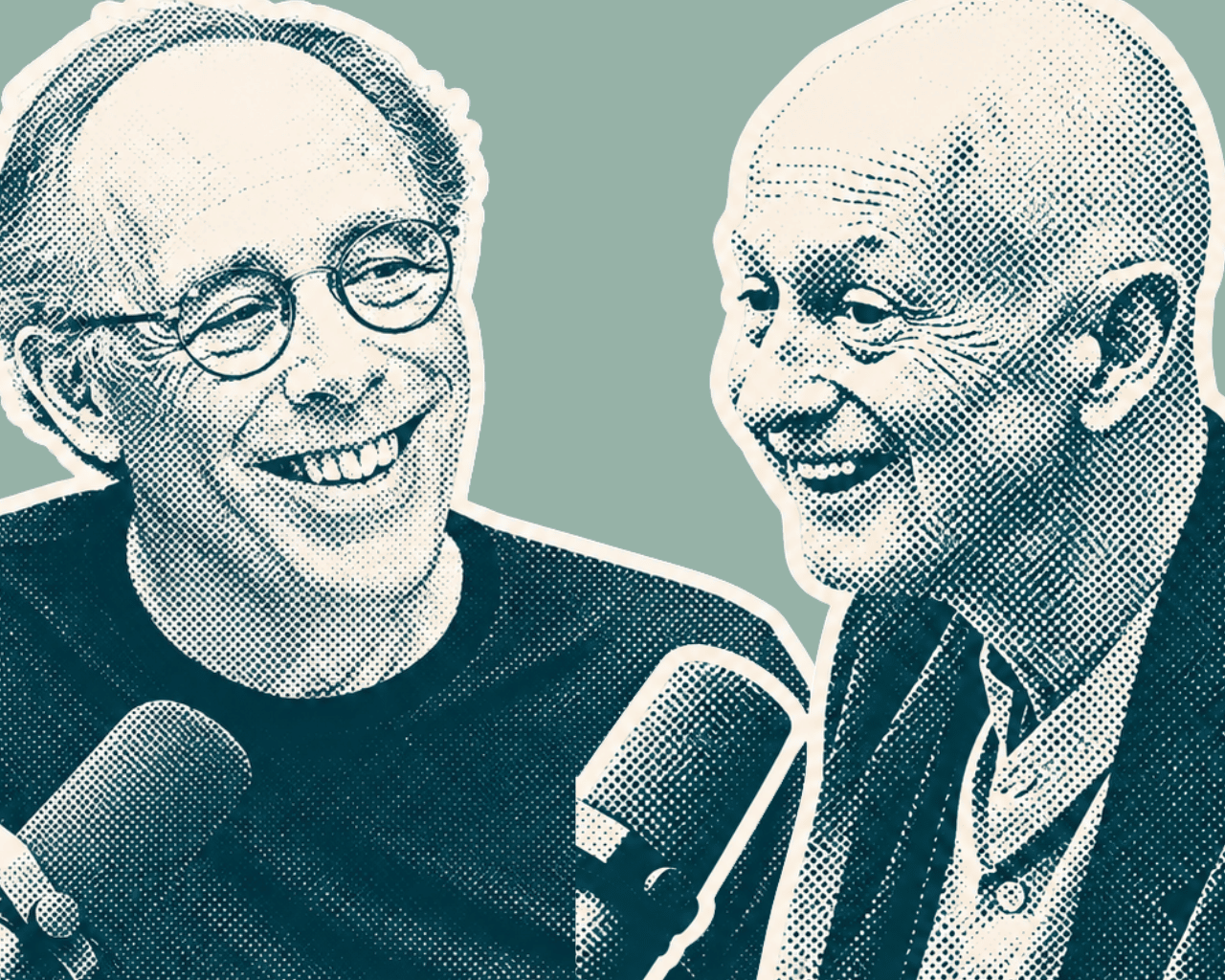
That approach eventually found an outlet in MarcoToday, the video podcast I started in 2021, initially in Dutch and later also in English. It gave me the opportunity to discuss ideas I would once have dismissed and explore what I could learn from them. I wanted to make room for conversations about esotericism in which we could be curious, disagree and ask critical questions without dismissing each other.
Over the years, I’ve talked to remarkable people who shared that openness. Together, we’ve explored everything from the practice of magic and the symbolism of alchemy to Hermetic philosophy and the wisdom of Taoism. I’ve recognised my own curiosity in their willingness to look beyond conventional thinking. Many of these encounters have challenged my assumptions and profoundly influenced my life.
And that brings me back to the boy on his father’s knee.
My father showed me that an ordinary piece of wood contained a world I could not see. He taught me to look beneath the surface, to ask questions and to keep digging. Yet when my questions took me beyond his beliefs, he found it difficult to follow. It took me years to recognise how easily I could do the same: draw a boundary around what I believed and dismiss whatever lay beyond it.
I still notice that tendency in myself. There are ideas I instinctively resist and questions I would rather leave alone. When that happens, I try to ask whether I have a good reason to stop or whether I have reached another boundary I have learned not to cross. Finding the courage to look beyond it is something I am still learning.
Looking back, I can see how long I worried about where my curiosity might lead me. Today, I am more concerned about becoming so certain of what I think I know that I stop asking questions. And perhaps that is the biggest change of all: I no longer need curiosity to lead me to certainty. It is enough that it keeps me looking.
Related


Subscribe to the MarcoToday newsletter
and join the conversation.