Essay
Freemasonry and Altered States of Consciousness
Empirical research on Altered States of Consciousness (ASCs) is booming. Research on psychedelics (psilocybin, LSD, DMT) reveals how ASCs are easily induced by these substances and have potential mental health benefits; recent approaches in cognitive neuroscience investigate the neural mechanisms correlated with these experiences; and (cognitive) anthropology shows the role of ASCs in multiple (non-Western) religious traditions. Philosophical reflection on ASCs has been growing steadily for the past 20 years. Philosophers of mind have discussed the relevance of these states for our understanding of consciousness. Philosophers of religion have explored how ASCs are involved in (alternative) modes of religiosity. Nevertheless, epistemic analyses remain, overall, scarce. It can be argued that, given the centrality of ASCs in several religious and spiritual traditions, and given how certain altered states are increasingly pursued to gain self-knowledge and heal past trauma, assessment of the epistemic dimension of such experiences is crucial.1
A crucial point of departure is the assertion that altered states of consciousness are “real rather than imaginary” and are “distinct from ordinary consciousness.” This claim resists reductionist interpretations that dismiss such states as mere psychological anomalies or subjective illusions. Instead, the presentation adopts a pragmatic epistemological stance: insofar as these states are coherently structured and generate consistent experiential insights, they may be regarded as legitimate modes of knowing. A central difficulty associated with altered states of consciousness, however, is that ordinary everyday language tends to reduce and simplify these experiences, thereby obscuring their essential qualities. As a result, an alternative mode of expression is required in order to adequately communicate, experience, and comprehend altered states of consciousness.
The relationship between ritual practice and altered states of consciousness has long occupied a central position in philosophical, anthropological, and religious studies. Freemasonry, as a historically layered and symbolically dense institution, offers a particularly rich case for examining how structured communal practices may generate distinctive epistemic and experiential modes. Drawing on a phenomenological framework, this article argues that Freemasonry operates not merely as a social or ethical system, but as a structured environment for the cultivation of ASCs, mediated through symbols, rituals, and collective intentionality. These states, rather than being illusory or purely subjective, may be understood as pragmatically valid forms of knowledge with distinct epistemic status.
Freemasonry’s historical development further contextualizes this epistemic ambition. Emerging in its institutional form in the early eighteenth century, while drawing on tradition and documented precedents dating back to the seventeenth century, it absorbed elements from older esoteric, religious, and philosophical traditions. Its connection to intellectual movements such as the Royal Society suggests an enduring tension between rational inquiry and symbolic modes of knowledge. Rather than opposing these domains, Freemasonry appears to integrate them, offering a framework in which symbolic and rational forms of understanding coexist.
A phenomenological approach to Freemasonry outlines a conceptual triad with symbols, rituals, and fraternity as the core elements of Freemasonry.

This triadic structure is not merely organizational but phenomenological: it defines the conditions under which meaning is produced and experienced. Symbols function as a non-propositional language, rituals as performative enactments, and fraternity as the social substrate that sustains shared intentionality. Together, they generate a field of experience that departs from ordinary consciousness, opening what the presentation terms an “epistemic expansion”. Central to this integration is the notion of the tableau, described as a “symbolic language” and “epistemic chart”.

A second phenomenon emerges during the ritual performed by the brethren in the lodge and is called the “egregore”.

The word “egregore” originates from the French “égrégore” and on its turn from the ancient Greek έγρήγορος (egregoros). It is described as a non-physical entity or thought form that arises from the collective thoughts and emotions of a distinct group of individuals. The French philosopher René Guénon redefined it as a collective entity made up in a way of the contributions of all its members. It is experienced by the individual members and can thus be described as an individual state of consciousness. The individual, as part of the collective, actively contributes to the ritual process, which is typically structured through an opening phase, a central enactment, and a closing phase. Particularly during the closing stage, both the collective and the individual may experience what can be described as an egregore, perceived as an altered state of consciousness. Repeated participation in such rituals often leads to a deepening and prolongation of this experience beyond the ritual context and into everyday life. In this sense, one may speak of a colonization of daily existence by the ritual experience.
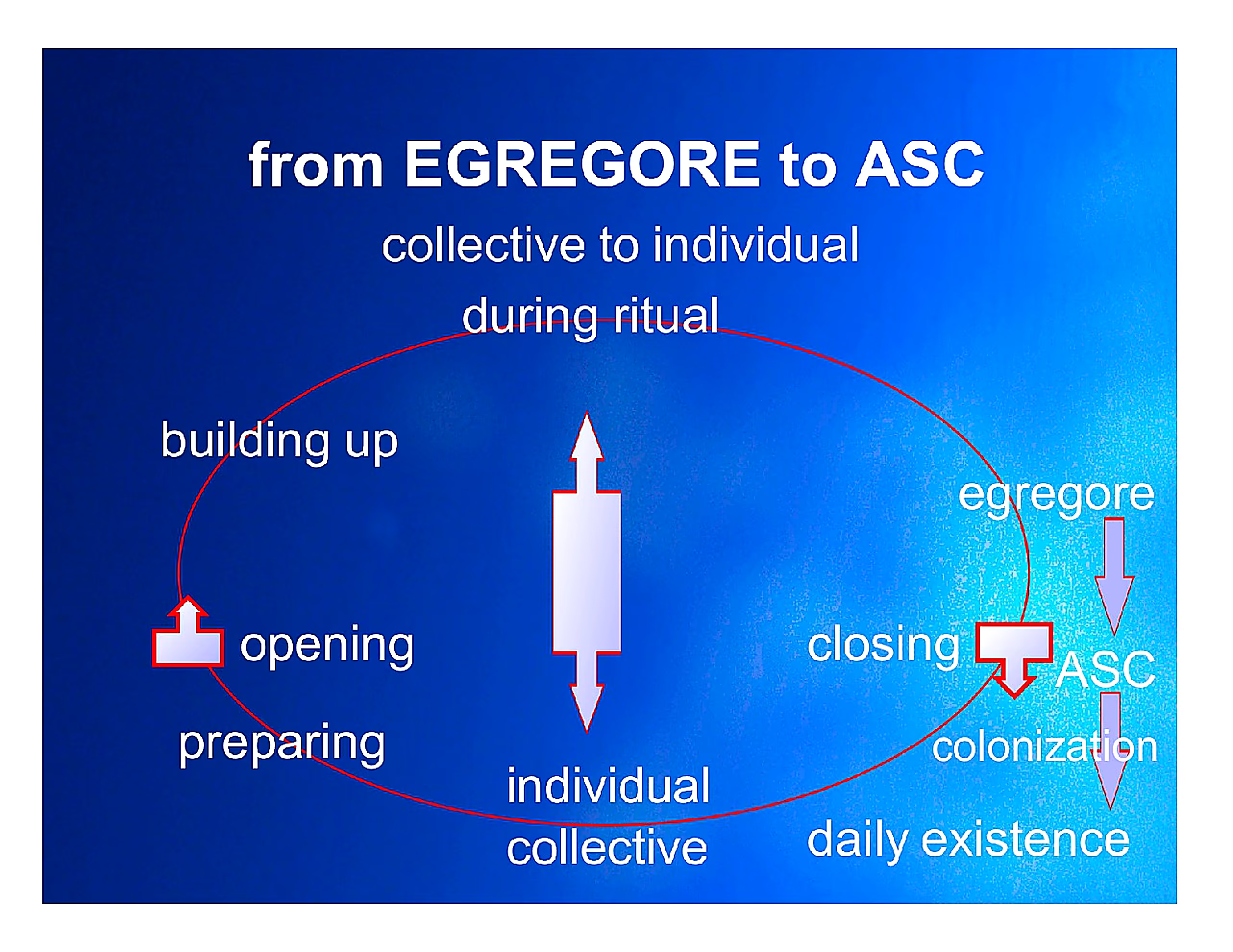
As noted previously, ordinary everyday language is insufficient to adequately describe or comprehend altered states of consciousness. Symbolic language, by contrast, is capable of representing these experiences as meaningful and real. It is in this context that the Tableau emerges as an epistemic framework through which such states can be articulated and understood. In this way, the altered state of consciousness becomes integrated into everyday life.

The tableau, physically represented in lodge spaces, functions as a visual and spatial condensation of Masonic knowledge. I here present the tableau of the Dutch Rite; however, the majority of tableaux associated with European Masonic rites exhibit substantial similarities. It maps a trajectory from ordinary, “daily life” consciousness to “spiritual enlightenment,” often symbolized along an East–West axis. This spatial symbolism is not merely decorative; it structures the initiate’s cognitive and affective orientation, guiding interpretation and experience.

At the centre, three symbols are depicted, namely the Plumb Line, the Square, and the Level, which together constitute the connecting bridge or liminal space between the common daily life, the West, and the sphere of enlightenment, the Orient or East. In the West are the symbols of labour depicted: the Ashlars, and in the East the symbols of Light.

The Plumb Line, the Square, and the Level have their moral connotations. Of the symbols of Light, the Sun represents the intellectual and spiritual source. Reason and wisdom should govern our intentions and actions. The Moon is the reflection and stands for intuition and spiritual guidance.
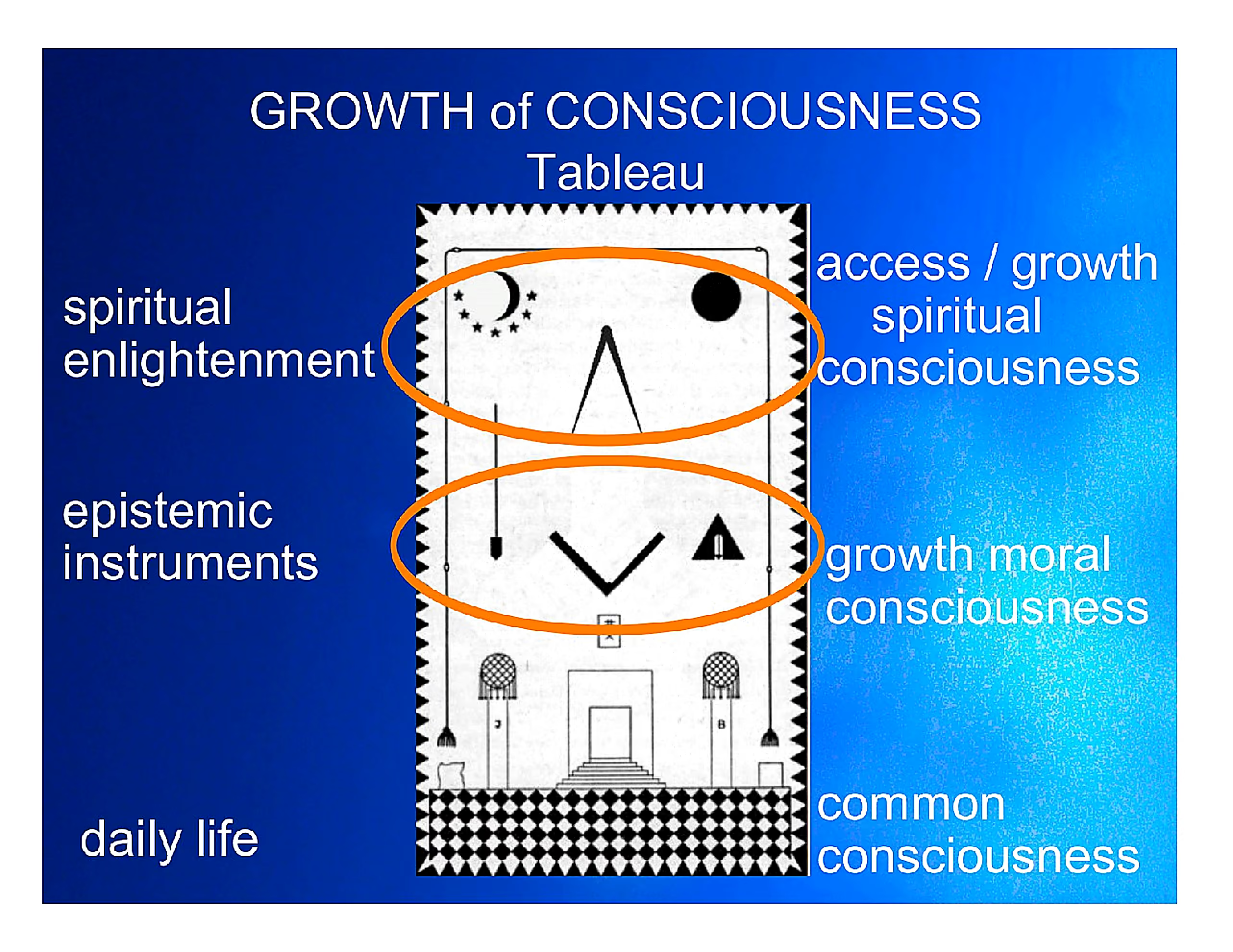
The two converge in the Compasses, which constitute the spiritual centre and delineate boundaries. Together with the square, it embodies the harmony between spiritual ideals and moral conduct. The development of moral and spiritual consciousness is represented through the arrangement of the Compasses and the Square, as well as through the accompanying symbols.
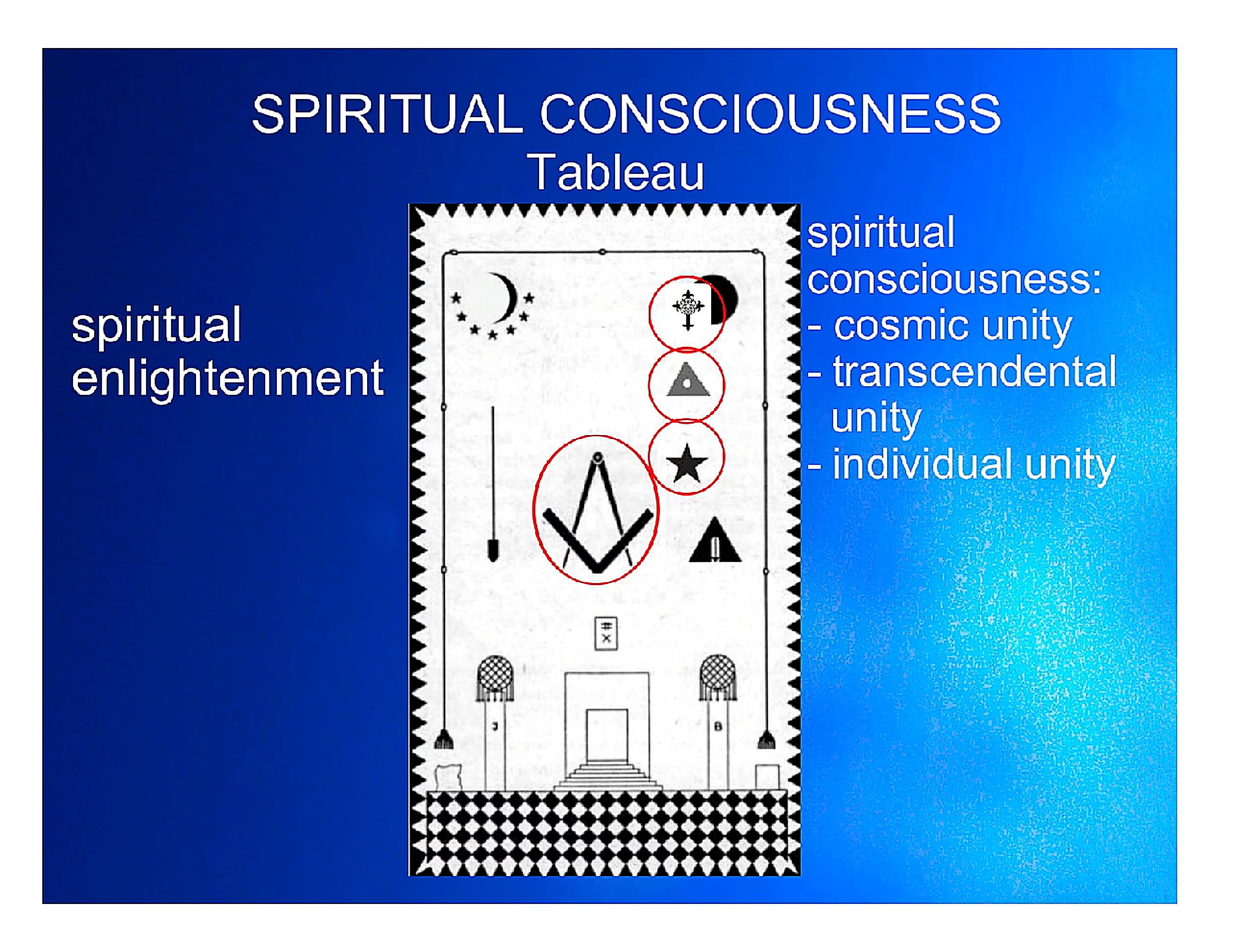
The Five-pointed Star symbolizes human perfection and mastery over the ego, the Delta signifies unity with the divine, and the Rose Cross represents spiritual regeneration and the unity of life with cosmic principles. The arrangement of the Compasses and the Square together with the accompanying symbols can be considered to represent the “growth of consciousness”.
The tableau thus serves as both representation and instrument. It encodes moral, spiritual, and epistemic “instruments” that facilitate what the presentation calls the “growth of consciousness”. This development is portrayed as a layered progression: from ordinary consciousness, through stages of moral development, toward forms of spiritual awareness characterized, moving from the lower to the higher levels, by “individual unity,” “transcendental unity,” and ultimately “cosmic unity.” Such descriptions resonate with enduring philosophical themes, including Neoplatonic ascent and mystical union, thereby situating Freemasonry within a broader tradition of transformative and initiatory knowledge.
Epistemic credibility is grounded in the ritual tradition and in the use of symbolic language as a means of expressing ASCs. These experiences are shared collectively through the formation of the egregore, while simultaneously being experienced on an individual level as a morally and spiritually informed mode of existence emerging through processes of self-reflection and symbolic interpretation. Ultimately, the reality attributed to altered states of consciousness gives rise to a form of practical knowledge, or praxis, in which experiential insight becomes integrated into lived existence. In doing so, it adopts a phenomenological criterion of validity grounded in the coherence, depth, and transformative impact of the experience itself. Participation in Masonic rituals fosters moral and spiritual awareness, self-reflection, and a sense of unity; these outcomes may therefore be regarded as indicators of epistemic validity. This does not imply that such knowledge is universally binding, but rather that it possesses a form of intersubjective credibility within the community that shares the symbolic framework.
Ultimately, Freemasonry can be understood as a system of “symbols of reality” aimed at the “development of spiritual ideals and ethical conduct”. Its rituals and symbols do not merely represent reality; they actively shape the participant’s experience of it. Through the interplay of collective and individual processes, it generates altered states of consciousness that function as sites of epistemic, moral and spiritual transformation. The growth of consciousness manifests through the experience of the egregore during ritual-induced altered states, its colonization of everyday life through repeated experiences of these states, and forms of knowledge and understanding grounded in the language of symbols, as represented in the tableau.
In conclusion, the philosophical significance of Freemasonry lies in its capacity to bridge the gap between symbolic meaning, communal practice, and individual experience. By situating altered states of consciousness within a structured and historically grounded framework, it challenges reductive accounts of knowledge and opens the possibility of a more expansive epistemology, one that recognizes the legitimacy of experiential, symbolic, and collective forms of knowing.
——————————
1 Workshop “The Epistemology of Altered States of Consciousness”, theological faculty of Tilburg University, 15 - 16 January 2026

Subscribe to the MarcoToday newsletter
and join the conversation.